Getting Started with Next.js
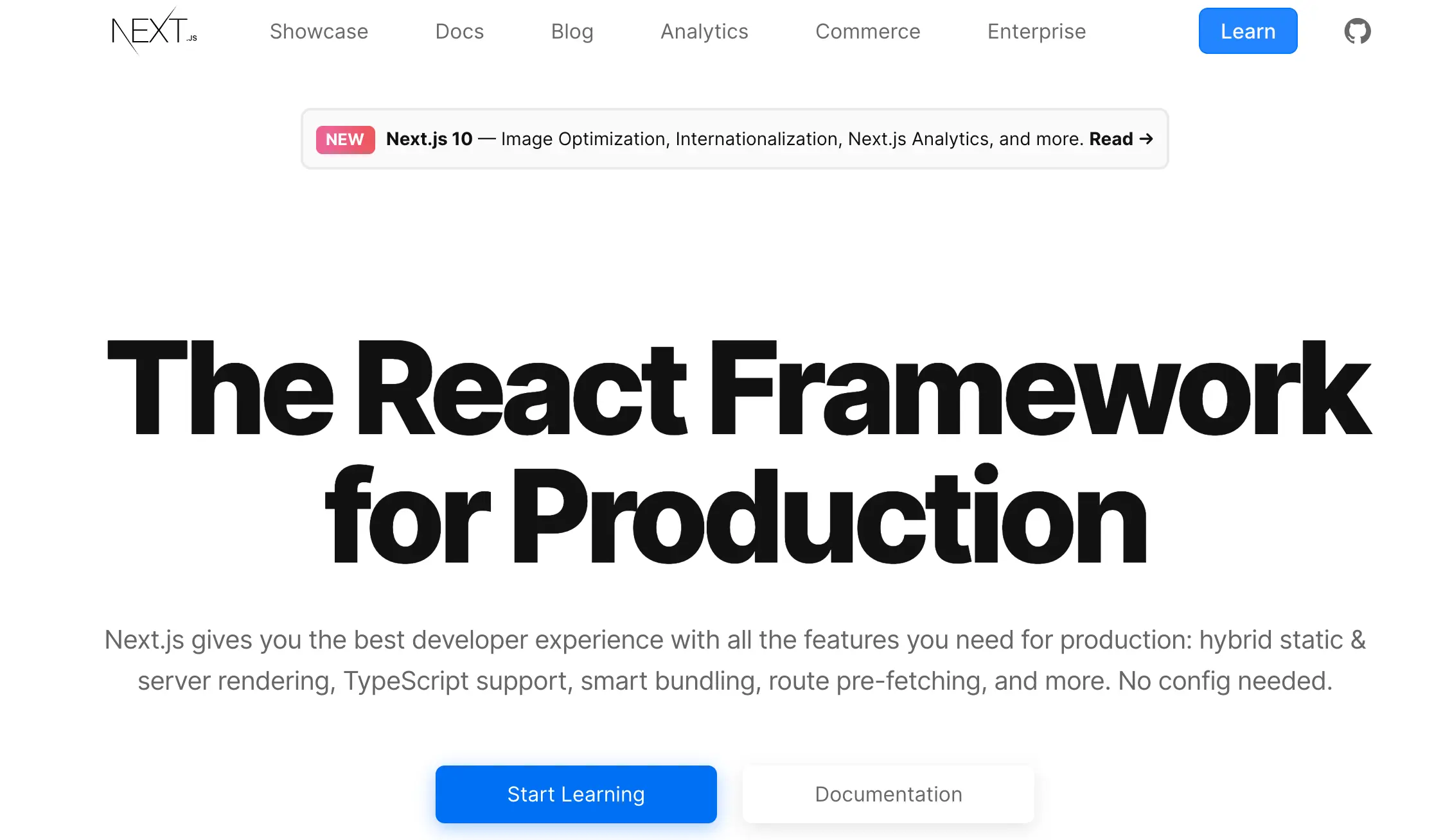
Next.js is a popular open-source React framework that enables developers to build highly performant and scalable web applications. It extends React's capabilities by offering powerful features like server-side rendering (SSR), static site generation (SSG), and API routes, making it an excellent choice for production-grade applications.
Why Choose Next.js?
- Server-Side Rendering (SSR) & Static Site Generation (SSG): Next.js allows you to pre-render pages on the server or at build time. This significantly improves initial page load performance and SEO, as search engines can crawl fully rendered content.
- File-System Routing: Creating new pages is as simple as adding a new file to the
pages(orappin newer versions) directory. Next.js automatically handles the routing for you. - API Routes: You can build your backend API directly within your Next.js project. This is incredibly convenient for full-stack applications, allowing you to keep your frontend and backend logic in one codebase.
- Image Optimization: The
next/imagecomponent automatically optimizes images, serving them in modern formats and appropriate sizes, which drastically improves loading times. - Fast Refresh: Enjoy an excellent development experience with instant feedback on your code changes without losing component state.
Key Concepts
- Pages: React components exported from files in the
pages(orapp) directory. Each file becomes a route. - Data Fetching: Next.js provides several methods for data fetching, including
getServerSideProps(for SSR),getStaticProps(for SSG), and client-side fetching usinguseEffector a data fetching library. - API Routes: Files in
pages/api(orapp/api) become API endpoints, allowing you to write server-side code with Node.js.
Next.js simplifies many complexities of building modern React applications, providing a robust foundation for projects of all sizes.
AutosysAI
Manage and simulate agentic workflows
MSME Registered (Govt. of India)
Udyam Registration No: UDYAM-RJ-17-0595127
Get the latest product news and behind the scenes updates.